Cauliflower has taken centre stage
How brassicas became the stars of Australian menus.
For decades, the brassica family (cabbage, cauliflower, broccoli, Brussels sprouts, kale) did its work quietly at the edge of the plate. Boiled, bland and often overcooked, these vegetables were the thing you ate because you had to, not because you wanted to. That era is over. Walk into any ambitious restaurant in Australia today and you’re as likely to find a whole roasted cauliflower as the centrepiece of a menu as you are a cut of beef. Brassicas haven’t just been rehabilitated; they’ve been promoted to headline act.
The turning point has been a shift in technique rather than in the vegetables themselves. Chefs have started treating brassicas the way they’d treat a good steak: dry the surface, hit it with serious heat, and let it develop real char. That aggressive caramelisation converts the sulphurous, slightly bitter compounds brassicas are known for into something deep, nutty and sweet. A wedge of cabbage seared hard or thrown onto an open flame stops tasting like a vegetable you’re tolerating and starts tasting like something you’d order again.
Cabbage in particular has had the most dramatic glow-up. Thick wedges of savoy cabbage are now roasted low and slow for hours, or charred fast and hot, and treated with the same seriousness once reserved for premium cuts. Hence the “cabbage steak” now turning up on menus around the country.
Pair a well-charred wedge with a rich white miso and dashi butter and the sweetness of the vegetable comes through against a savoury, umami-heavy backdrop. Or go the Italian route, dressing a slow-roasted red cabbage wedge in prune purée or apple cider and burying it under a heavy snow of aged parmesan and crisp croutons — proof that a vegetable dish can carry the same indulgence as a classic bistro plate.
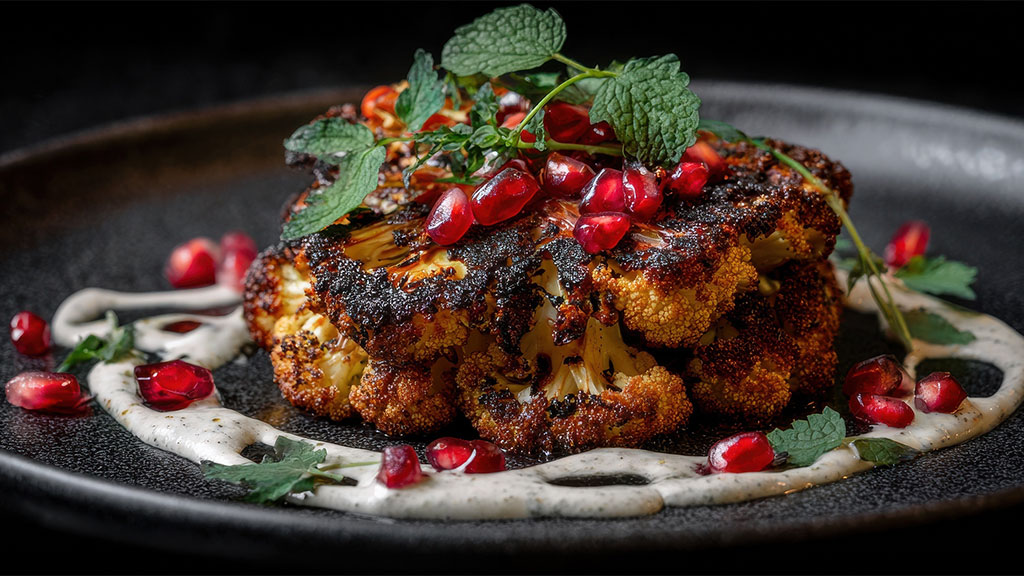
Cauliflower has followed a similar arc, helped along by its dense, meaty texture, which holds up to bold spice and dramatic presentation. The whole-roast cauliflower (blanched, then roasted until deeply golden and served intact, smothered in tahini, herby chermoula and pomegranate seeds) has become something of a modern restaurant cliché precisely because it works. It looks like a centrepiece and eats like one too.
On the other end of the spectrum, Keralan-style fried cauliflower (florets tumbled in a spiced rice-flour batter with curry leaves and Kashmiri chilli, fried until shatteringly crisp and served with coconut chutney) has turned up as a playful, high-impact starter on Indian-influenced menus, proving brassicas can do bar snack as easily as showpiece.
Broccoli and its slimmer cousin broccolini are getting the same treatment, with chefs increasingly interested in the contrast between crunchy floret and tender stalk rather than steaming both into submission. Wood-fired broccolini, blistered quickly and plated over cold, creamy stracciatella with a scoop of house-made chilli oil, plays hot against cold and crisp against creamy in a single dish. Simpler but no less considered is the shaved broccoli salad: raw florets and peeled stalks cut wafer-thin on a mandoline and dressed in a sharp, garlicky Caesar or pecorino-lemon vinaigrette, built to outperform a standard leafy salad on crunch and depth of flavour.
Brussels sprouts and bitter greens round out the trend, and here the lesson is the same: maximum heat turns bitterness into nuttiness. Flash-fried until the outer leaves turn into crisp, near-translucent shards, sprouts tossed in a sweet-and-sour Italian agrodolce and scattered with toasted hazelnuts have become a reliable menu favourite. Cime di rapa (broccoli rabe slowly melted down in olive oil, garlic and anchovies until they collapse into a thick, clinging green sauce) brings the same idea to a plate of orecchiette, an old Puglian classic finding new fans on Australian menus.
None of this is really about novelty. It’s a recognition that brassicas, cooked with the right technique, can carry a plate on their own terms – texture, char, sweetness and all. For an industry always hunting for the next ingredient story, the vegetables were there all along, waiting for someone to stop boiling them.