Chemicals on your fruit and veg
What they are and why it matters
In October 2026, independent laboratory testing found pesticide residues on fruit and vegetables sold by Coles, Woolworths and Aldi. A handful of samples were above Australia’s legal limits, and some carried chemicals that are not approved for that crop at all. Here is a plain-English guide to what was found, why it matters, and what it could mean for your health.
Key facts at a glance
- Who tested: Pesticide Action Australia, a not-for-profit, in its Australia’s Residue Report 2026, released 7 October 2026.
- What was tested: 78 samples of 13 fruits and vegetables, bought in June 2026 in Sydney, Melbourne, Brisbane, Perth and Adelaide, and tested by a NATA-accredited laboratory.
What did the 2026 testing find?
- 54 different pesticides: Pesticide Action Australia, a not-for-profit, in its Australia’s Residue Report 2026, released 7 October 2026.
- Over the legal limit: 4 samples (grapes, strawberries and capsicum). Strawberries carried the fungicide bupirimate at 9.5 times the legal limit. Grapes carried the insecticide bifenthrin at 5.5 times the limit.
- Possibly unauthorised use: 8 residues, including fipronil and permethrin on capsicum, where no approved limit, label or permit could be found.
- “Forever chemicals”: 44% of samples contained at least one PFAS pesticide.
- Banned elsewhere: 56% of samples contained at least one pesticide not approved in the European Union.
Most supermarket produce carried at least one pesticide residue, and 12 of the 78 samples contained a chemical that was either over its legal limit or not authorised for that crop.
The produce tested was ordinary shopping-trolley fare: apples, avocados, bananas, blueberries, broccoli, capsicum, cucumber, grapes, lettuce, potatoes, rockmelon, strawberries and tomatoes. All of it was Australian-grown.
Beyond the limit breaches, the lab found five different organophosphate insecticides, and neonicotinoid insecticides in 14% of samples. (See below for what these chemicals do.) Many items carried several chemicals at once.
Pesticide Action Australia describes the report as a snapshot, not a verdict on every item sold. A residue alone doesn’t prove that a grower broke the law. Supermarkets say their suppliers must meet Australian standards and are independently audited and tested. Growers’ body AusVeg says Australian vegetables are among the safest in the world, and Berries Australia says the strawberry residue did not pose a health risk.
Is this the first warning?
No. In late 2024, Southern Cross University professor Kirsten Benkendorff tested supermarket blueberries and raspberries from northern New South Wales. Every sample carried between four and 11 pesticides.
Most residues were within legal limits. But some blueberries carried enough dimethoate, an organophosphate banned in the EU since 2019, that a child or adult could pass the safe daily intake by eating less than one 125g punnet. Traces of thiometon, banned in Australia since 2001, also turned up.
The national regulator, the APVMA, then found that Australians now eat 285% to 962% more berries than its older data assumed. It proposed suspending dimethoate on berries as a precaution, while maintaining that residues were unlikely to pose a serious risk.
Why is it a concern?
The bigger worry is not any single punnet, but how little we know about what’s on our food overall. Four gaps stand out:
- Limited testing. Routine national residue testing of domestic fresh produce reportedly ended in 2014, and state testing covers only selected crops. Results are rarely published in full.
- The “cocktail effect”. Safe limits are set one chemical at a time, yet many samples carried several residues together. How these mixtures act in the body is poorly understood.
- Out-of-date assumptions. The berry case showed limits can rest on old eating patterns. When we eat more of a food, the margin of safety shrinks.
- Weaker rules than overseas. Australia still allows numerous pesticides that Europe has banned, such as dimethoate.
What can these chemicals do to people?
The dose matters. Small, occasional amounts are very different from regular exposure over years, and going over a legal limit doesn’t automatically make food unsafe. Still, the chemical families found in this testing have well-documented risks.
Organophosphates (such as dimethoate). These insecticides work by disrupting the nervous system. The clearest concern is for unborn babies and young children, whose brains are still developing. A 2019 review found that 45 of 50 studies linked organophosphate exposure to problems with children’s brain development, including learning, memory and attention.
PFAS (“forever chemicals”). These break down extremely slowly, so they can build up in the body and the environment. They have also been linked to higher cholesterol, thyroid disease, kidney and testicular cancer, and weaker vaccine responses in children. One forever chemical, PFOA, was classed as cancer-causing in humans by the World Health Organization’s cancer agency in 2023. The PFAS pesticides on produce are different compounds and far less studied, which is itself part of the worry.
Hormone disruption. Some pesticides can interfere with the body’s hormone system. Experts point out that current residue testing doesn’t adequately consider these effects.
Those most at risk are pregnant women, babies and children, who eat more food for their body weight.
What can shoppers do, and what needs to change?
There’s no need to stop eating fruit and vegetables; their health benefits are well established. A few habits reduce exposure:
- Wash produce under cool running water. It removes some surface residues, though not all.
- Peel where it makes sense. (However, the skin is sometimes the richest source of vitamins, minerals and fibre.)
- Vary what you eat.
- Choose organic or low-residue options when you can. Organic produce can still carry traces, but at much lower levels.
Lasting change, though, sits further up the supply chain. Pesticide Action Australia is calling for more frequent testing, full publication of results, and practical support for farmers who want to cut their chemical use. That last point matters most: growers rely on these chemicals to protect crops and incomes, and few can change methods without help. Backing farmers through that transition is how cleaner food becomes the norm, not the exception
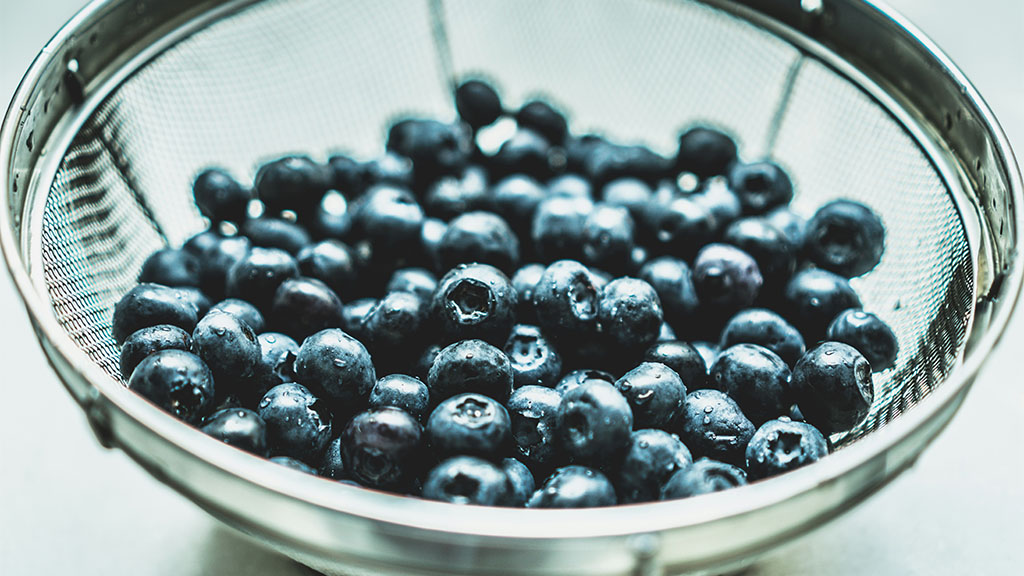
Photo credit: Photo by Raphael Maksian via Unsplash
Sources
- Pesticide residues found on fruit and veg sold at major Ausralian supermarketsPesticide residues found on fruit and veg sold at major Australian supermarkets — news.com.au, 7 October 2026
- Who’s afraid of what’s on our fruit? — Inside Retail, October 2026
- Produce testing finds 201 pesticide residues across 78 samples in Australia — FreshPlaza, October 2026
- New report reveals pesticide residues and regulatory gaps in Australian produce — FreshFruitPortal, 19 October 2026
- Supermarket tests in Australia found illegal pesticides on produce — The Cool Down, citing 7NEWS, 9 October 2026
- Are your blueberries safe? — SBS News, 2025
- Australian blueberries show pesticide residues — FreshPlaza, 2025
- Proposed suspension of specific dimethoate products — APVMA, August 2025
- Unacceptable residues and chemical use regulation — Agriculture Victoria
- Effects of organophosphate exposure on child neurodevelopment: a systematic review — PubMed, 2019
- Organophosphate exposures during pregnancy and child neurodevelopment — PLOS Medicine, 2018
- PFAS health effects: IARC 2023 classification and C8 Science Panel review of PFOA evidence